Click on the image above for more information on my books, or to purchase a copy

"Amythyst Raine is an author known for her work in the realm of spirituality, witchcraft, and the metaphysical. Her books often explore themes related to paganism, tarot, and spiritual practices. On Amazon, you can find a variety of her published works, including titles like "Tarot: A Witch's Journey", where she combines personal experiences with tarot wisdom, and "The Spiritual Feminist", which delves into the empowerment of women through spiritual practices. Raine's books are often praised for their accessible writing style and insightful perspectives, making them popular among those interested in exploring spiritual paths and the divine feminine. If you're curious about these topics, her works can serve as a thoughtful guide on your journey."
Showing posts with label mediumship. Show all posts

Sunday, December 8, 2024

Georgia Spirits, He Followed Me Home


Spirits…The Little Boy from Georgia

Yesterday evening I had to pick my 16-year-old daughter up from work. It was after 10pm as I sat in the car, in the dark, by myself.  Suddenly a song sprang into my head, a children’s song. I started to sing it out loud, though I was sure I didn’t know it, and even now, I don’t remember what it was.

With a start, it dawned on me that this is one of those "unusual" moments ghost hunters are always waiting for. I realized that the song wasn't coming from me, from my brain, but from something around me, outside of me.

I had been reading several books on mediumship lately, how to tap into your psychic center and communicate with the dead. Thus far, I had only been reading about the subject, and I hadn’t put into practice what the experts were telling me to do. I figured that now was the perfect time, the perfect situation, to use the information I had been picking up from books and a multitude of experienced mediums.

By asking an entity questions and using a series of predetermined mental images for specific answers, you can actually receive the answers, as well as other types of information, often in depth, and even (if you are empathic) the emotional feelings of a spirit.

I began by speaking out loud:

“I know that I’m not alone. I can feel you here. Feel free to communicate with me, if this is what you desire. Are you an adult?”

A black rose instantly flashed in my mind, but also before my eyes at the same time, it’s a strange sensation to try and describe.  This was my symbol for "no".

So the answer was no.

“Are you a child?”

Instantly, a white rose appeared, in the same manner as the previous rose, my symbol for "yes".

So the answer was yes.

“Are you over ten years of age?”

The black rose again, another no.

“Are you under ten years of age?”

The white rose, a yes, of course.

“Are you a boy?”

The white rose, another yes, and this time a blue sphere flashed before my mind, a globe of the earth.

“Where are you from?”

In a split second a visual image of a US map appeared in my mind, and the state of Georgia seemed to literally leap from it.  Again, there was the odd sensation of both seeing it in my mind and seeing it before my eyes at the same time.

“What letter of the alphabet does your first name begin with?”

White letters against a black background popped into my mind, and almost simultaneously, as it appeared, the ‘R’ zoomed in before me.  I have experienced unusual psychic images of this type before, always white letters on a black background forming words.

“Is your name Robert?”

I’m not sure how to describe it, other than to say an instantaneous negative feeling came over me. I assumed the answer was no.

“Is your name Roger?”

Again, the only way to describe the sensation that followed is to say that it was like asking a living person if this was their name and receiving a positive response…"Yes".

By this time, I had been sitting in the car a good twenty minutes or so. My daughter would be coming any moment. They had turned out the lights in the building. I was tired and actually felt drained. I closed the "session" with Roger gently and positively:

“I’m going to stop for now,” I told him, “But I’ll talk with you again sometime.”

Later that night…

The girls and I had dozed off in my bedroom while we were watching TV. My husband had been watching a movie in the living room. He finally came to bed around 2am, and we shuffled everyone around, herding sleepy-eyed children to their own beds.  Of course, by the time we did this and then hubby had to tell me about the movie he had been watching, I was wide awake. And wouldn’t you know, he fell asleep with no problem while I lay skimming through the channels.

I was just beginning to get drowsy when I heard it… a crying, whimpering, sniffling child.

I had kids in various stages of flu and colds, so I immediately thought it was my youngest. I jumped up and threw my robe on so fast that I woke my husband.

“What’s the matter?” he mumbled from beneath the covers.

“Emma’s crying,” I said.

I went racing down the hallway to the couch, where she’d been sleeping the last couple nights while she was sick. Emma was sound asleep. I walked back up the hallway and paused ahead of two more bedroom doors… silence.

Then I heard it again, but this time it sounded as though it was coming from downstairs. I raced down two flights of stairs and stood in the family room listening for the two older children whose bedrooms are down there... nothing but silence.

I was so awake that I decided to sit down to the computer for a while. I spent between two or three hours blogging and browsing, and ever so often I was interrupted by the sounds of a crying sniffling child.  I made several trips upstairs, even opening one of the bedroom doors to wake a daughter, just to be sure it wasn’t her. I even checked the cats, all curled onto the couches and easy chairs, warm sleepy fur balls.

I stood at the top of the stairs for several seconds to listen for the voice. Very faintly, as though from a great distance, I could hear it. Goosebumps rushed up my legs, and the hair on the back of my neck stood up.  About 5am, exhausted, I finally tried laying down to go to sleep. Intermittently, I would hear the crying child, until finally it stopped, or I fell asleep.  

The next morning, after the kids were all awake and up, I asked them all how they had slept. No problems, they all declared. Everyone had a good nights sleep.

It didn’t dawn on me until then that the voice I heard may have belonged to the little boy from Georgia.


Amythyst Raine
copyright 2010


Tuesday, July 12, 2022

Have you heard of Victoria Woodhull?


Woodhull, Victoria (1838–1927)


American advocate of free love, women's suffrage and workers' rights, one of the most notorious women of her era, who lectured, operated a stock brokerage, ran for the U.S. presidency, precipitated a scandalous adultery trial, and flaunted Victorian social and sexual mores throughout most of her life .
 
Name variations: Victoria Woodhull-Martin; Victoria Claflin; "The Woodhull" and "The Wicked Woodhull." 

Born Victoria Claflin on September 23, 1838, in Homer, Ohio; died on June 9, 1927, at her estate in Worcester-shire, England; daughter of Reuben Buckman Claflin (a gristmill operator) and Roxanna (Hummel) Claflin; sister of Tennessee Claflin (1846–1923) and Utica Claflin Brooker (d. 1873); mostly self-taught; married Canning Woodhull, c. 1853; married Colonel James Harvey Blood, in 1866; married John Martin, in 1882; children: (first marriage) Byron Woodhull and Zulu Maude Woodhull.

Promoted by their father, toured as a clairvoyant with her sister Tennessee; moved with husband Canning Woodhull and children to New York City; while touring as a spiritualist, met Colonel Blood, an advocate of free love, whom she married (1866); with her sister Tennie, opened the first women-owned brokerage firm on Wall Street (1870); announced her candidacy for the presidency (April 1870); founded Wood-hull & Claflin's Weekly (May 1870); addressed the House Judiciary Committee regarding women's right to vote (January 1871); publicly declared herself a practitioner of free love (November 1871); nominated by the Equal Rights Party as candidate for the U.S. presidency, with Frederick Douglass as vice-president (1872): in a direct challenge to the Victorian standards of morality of the day, revealed the extramarital affair of the Reverend Henry Ward Beecher and Elizabeth Tilton, leading to charges of criminal libel and mailing obscene literature (November 1872); moved with family to England, with probable financial support of the heir of Commodore Cornelius Vanderbilt (1877); married millionaire John Martin (1882); became a philanthropist on behalf of agriculture and education.

On the evening of November 20, 1871, Victoria Woodhull waited to walk on stage at New York City's Steinway Hall and speak on the subject of free love, wondering whether the Reverend Henry Ward Beecher would accept her challenge for him to appear as the introductory speaker. By all accounts, the scene a few days earlier, when she had extended the invitation, had been dramatic. A fiery evangelical minister, Beecher was the brother of the author of Uncle Tom's Cabin, Harriet Beecher Stowe , and pastor of Plymouth Church in Brooklyn. Privately, Beecher was widely rumored to have had many affairs with women of his parish, but from the pulpit he had publicly denounced sexual activity outside the institution of matrimony as immoral. In the meeting, which had included Theodore Tilton, a current lover of Woodhull's and formerly Beecher's best friend, Woodhull had threatened to expose Beecher unless he agreed to validate her views by introducing her. Years later Tilton described how Beecher, with tears streaming down his face, begged Woodhull to "let him off," on the grounds that associating himself with a leader of the free-love movement would cause him to lose his reputation, if not his entire parish. "Mr. Beecher," Woodhull replied, "if I am compelled to go onto that platform alone, I shall begin by telling the audience why I am alone and why you are not with me."

Beecher did not appear, but at the last moment Tilton did, offering his arm to lead Wood-hull on stage. As a member of Beecher's Plymouth Church, editor of religious and liberal newspapers, author, and titular head of the National Women's Suffrage Association, Tilton had the credentials to enhance Woodhull's stature as a speaker, and he gave her a grand introduction.

Her speech had not gone far when Woodhull declared, "Yes! I am a free lover!," and was met with hisses and howls. "I have an inalienable, constitutional, and natural right to love whom I may," she continued, "to love as long or as short a period as I can, to change that love every day if I please! And with that right neither you, nor any law you can frame, have any right to interfere." Tilton, like the audience, was astounded by this admission, which had not been planned. That night she would refrain from exposing Beecher (who had recently ended an affair with Tilton's wife), but the speech was to be a singular milestone in a highly controversial public life.

Victoria Woodhull … has faced and dared men to call her names that make women shudder.

~ Elizabeth Cady Stanton


The childhood of Victoria Claflin Woodhull had prepared her for a life of publicity and drama. Born on September 23, 1838, to Reuben Buckman Claflin and Roxanna Claflin in Homer, Ohio, she was the fifth of seven children. Her father ran a gristmill and had a penchant for gambling, scheming, lawsuits, and any other opportunity to get rich quick. Her mother, quick-witted with a fiery temper, and inclined toward clairvoyance, instilled in her children a sense of familial loyalty that would lead Victoria to provide financial support for many of her family members in later years. An ardent follower of evangelical religion, Roxanna brought her children to camp meetings in the woods led by traveling preachers, including the respectable and invigorating revivals made famous by the Reverend Lyman Beecher (the father of Victoria's later adversary). Drawn into a state of religious ecstasy, Roxanna would join others at the meetings in whirling and speaking in tongues.

Victoria grew up imitating preachers, gathering other children around her to captivate them with her fiery preaching. If she failed to hold their attention with shouts of "Sinners repent! Repent or know the burning flames of hell!," she sometimes shifted to gory tales of Indian scalpings. She also showed signs of what was considered clairvoyance, playing childhood games with the spirits of her deceased baby sisters, and asserting that she saw the devil. From an early age, she was especially close to her sister Tennessee Claflin , who shared her gift for "second sight," which their father saw as a golden opportunity. In an era when séances, replete with raps on walls and moving furniture, were immensely popular, Buck Claflin became "Dr. R.B. Claflin, American King of Cancers," and took his two daughters on a road show where they drew audiences as healers with psychic powers.

Because of these entertaining and profitable activities, Victoria reached the age of 15 with only a few years of education. She was blossoming into a beauty, however, with large blue eyes, delicate features, and rose-petal skin. Before turning 16, she married Dr. Canning Woodhull, a well-born and well-educated man who soon proved to be an alcoholic and a womanizer. As a physician, he had difficulty maintaining a practice, and after the birth of their son Byron, Woodhull convinced Canning to move the family to San Francisco, where she became the breadwinner as a cigar girl and actress.

Her sister Tennie had meanwhile moved to New York City with their father, and from San Francisco Woodhull felt she heard Tennie's voice "call out" to her. In 1860, the Woodhulls packed up and moved to New York, where Tennie proved to be untroubled. Perhaps Woodhull's impulse came out of her own need for her family. In New York, the sisters set up a new practice as "magnetic healers" and spiritualists, with the Woodhulls and the Claflins all living in a single hectic household. That year, Victoria's young son Byron fell from a second-story window. Though he recovered after lying near death for several days, he was left severely and permanently brain damaged. Nursing her son, and caring for Canning through his bouts with alcohol, Woodhull continued to see clients, and in 1861 her life was brightened by the birth of a daughter, Zulu Maude Woodhull .

In 1864, the need for new clientele prompted the clan to move to Cincinnati. Tennie and another sister, Utica Claflin Brooker , were by now as attractive as Victoria, and all were vibrant like their mother, with passions that extended beyond religious zeal. After charges of illicit sexual activities and scandals forced the group from their home, they resettled in Chicago, where the pattern was repeated. By this time, Woodhull had been all but deserted by Canning, who came home only when he needed money. Given the mores of the times, the relations of the sisters with men may have been sexual or merely flirtatious, but they were shocking enough to their neighbors to give the appearance of prostitution and combined with the family's generally raucous behavior, caused them to be chased out of their homes more than once.

The two sisters were on the road again as clairvoyants when Woodhull met Colonel James Harvey Blood in St. Louis. He was a courteous, educated, and respected man, and a believer in the doctrine of free love. Victoria now had a name and a theory for the lifestyle that she and her sisters had been leading.

In an era when divorce was extremely rare and difficult for women to obtain in most states, advocates of free love viewed marriage as an institution that could trap people in unhappy lives. In their view, marriage should be recognized as a social partnership, and if some element—such as sexual gratification or companionship—were missing in the relationship, then spouses should be allowed to find that element through loving more than one individual. As Woodhull would later write, "Copulation without love is prostitution."

Through her acquaintance with Blood, Woodhull became highly articulate about her views of free love.  Her own life had taught her to despise the hypocrisy of a sexual double standard that allowed men to engage in extramarital sex without social repercussions (and without fear of, or responsibility for, pregnancy). Almost everywhere, a man could divorce a wife who had committed adultery much more easily than a woman could obtain a divorce from an adulterous husband. Respectable women could not admit publicly to having sexual desire. Respectable men supported the same lie, even while having mistresses, frequenting houses of prostitution, or profiting from the ownership of buildings that housed prostitutes. Yet prostitutes were shunned by society for their profession (then legal in many communities and not widely outlawed until the end of the century).

Among a number of radical beliefs that gained hold during the 19th century, the doctrine of free love was seen by many as the most dangerous, presenting a serious threat to the social order by desanctifying the family unit. If people were allowed to have sex with anyone they pleased, who would take responsibility for the children? Furthermore, venereal disease—often spread through prostitution—was commonplace, and had no cure; and there were no reliable methods of birth control. For advocates of the movement, these social ills were precisely the reasons for needing a change in sexual standards. According to their argument, if human sexuality were more openly discussed, and people were not forced to deny their desires, prostitution would be unnecessary, women would be exploited less, and    lives could be saved, because sexually transmitted disease would be recognized and treated more quickly.

Advocacy of free love was not advocacy of sexual licentiousness. Instead, men and women were encouraged to choose sexual partners based on mutual feelings rather than according to the dictates of church and state; to the extent that individuals acted responsibly and openly, marriage laws would not be needed.


at AMAZON


As a spiritualist, Woodhull found the movement compatible with her belief that the soul transcended the boundaries of the material world represented by marriage laws. Such a view also resembled anarchy in many ways, and many followers of free love were anarchists, at a time when anarchy was considered a threat to the nation. Politically, Woodhull's outlook was actually closer to early communism, and she became a member of the Marxist International Workingmen's Association (from which she was later expelled). Clearly, the free-love doctrine carried some fiercely political undertones.

By 1866, Victoria Woodhull had divorced her first husband and married James Blood. They settled with Tennie and others of her family in New York City, where Woodhull established a salon attended by the brightest and most articulate radicals of the day, who met to socialize and spar intellectually. The prosperity of the family was greatly increased after Tennie met the New York millionaire Commodore Cornelius Vanderbilt, then a 76-year-old widower whose wife Sophia Johnson Vanderbilt had just died in 1868. Sought after for her powers of spiritual healing, Tennie, in this case, turned her "magnetic powers" to arousal, and she became Vanderbilt's lover. When the two sisters approached Vanderbilt for financial advice, he became indispensable, advising them at first on business strategy, and later backing them in the opening of a brokerage office, Woodhull, Claflin & Co., the first run by women on Wall Street. The firm was an immense success, and the sisters were referred to by the New York Herald as the "Bewitching Brokers."

With this prosperity, the sisters were able to support their parents, a sister and her husband, and even Canning Woodhull all in one large home. Although many were scandalized, Wood-hull found the presence of her first husband, as the father of her children, entirely appropriate and made her reasoning clear: "Dr. Woodhull, being sick, ailing and incapable of self-support, I felt it my duty to myself and to human nature that he should be cared for…. My present husband, Colonel Blood, not only approves of this charge, but cooperates in it. I esteem it one of the most virtuous acts of my life."
   
Woodhull gained fame as a stunning conversationalist among the intellectuals and politicians who frequented her salon. Two who were charmed by her attractiveness, intellect, and flair for making ideas dramatic were the brilliant Stephen Pearl Andrews and Congressman Benjamin F. Butler of Massachusetts. Both were sympathizers with the free-love doctrine, as well as supporters of women's right to vote, and schooled Woodhull in the limitations of women's legal and political rights.

Salon discussions frequently centered on the hypocrisies of American social and political life, as freethinkers argued for nothing less than a social revolution. Intent on exposing injustices between genders, classes, and races, Woodhull, Tennie, and Blood took every opportunity to call attention to cases of individual rights being denied. On one occasion, the sisters arrived to dine at Delmonico's, the famous restaurant near Wall Street, and were denied service because the establishment followed a rule common to many restaurants, holding that ladies were not welcome without male escorts after 6 pm. Tennie went to the door and waved to the cab driver waiting with a carriage for them outside. The man was seated with them, and the women ordered soup for three, breaking the conventional codes of both gender and rank, as Delmonico's was forced into serving two independent women and an embarrassed working-class man.

In May 1870, the sisters began the publication of Woodhull & Claflin's Weekly, with a masthead that read "Don't Fail to Read the Lady Broker's Paper! The Organ of the Most Advanced Thought and Purpose in the World!" The paper lasted until June 1876, advertising their business and spreading the ideas that flourished in their salon, with its opinions and exposés about free love, workers' rights, political scandals, and social injustice. It also became a platform for Wood-hull's presidential candidacy, announced that April. Her plan was to run as an independent, giving her two years to publicize her ideas before the national presidential campaign.

Of all the ideas she brought to the public, Woodhull was most dedicated to free love. But once she grasped how few legal and political rights women actually had, she also made "Votes for Women" her personal mission and inspired many gatherings about women's rights. On January 11, 1871, she appeared before the House Judiciary Committee to deliver a memorial on the topic of woman suffrage. A "memorial" was a speech that was printed, circulated, and personally presented by a citizen before Congress in order to persuade it to enact a law. Since no woman had ever before been recognized by a congressional committee, Woodhull's appearance caused a huge stir. That same morning, the liberal suffragists of the National Woman's Suffrage Association (NWSA) had planned the opening of their annual convention in Washington, but Woodhull's appearance threatened to upstage them; many in the movement also feared that Woodhull's radical advocacy of free love would give suffragists a bad name if the public associated her position with votes for women. After much arguing, the NWSA postponed its morning session and sent a delegation, including Susan B. Anthony , to hear Woodhull.


Woodhull was by this time a brilliant orator. When she spoke her face brightened, her whole body seemed to communicate her words to the crowd, and her speeches always built up momentum. That day, her argument was sharp and clear, invoking the 14th and 15th amendments as proof of women's right to the vote. Not surprisingly, the congressional majority report written in response to the speech was not favorable, but the minority report—signed by Benjamin Butler—issued the strongest official argument to date in favor of women's rights under the Constitution.

The suffragists, meanwhile, were so impressed that they invited Woodhull to repeat her memorial before their convention as the keynote speaker. Leaders of NWSA, including Susan B. Anthony, Isabella Beecher Hooker (sister of Henry Ward Beecher and Harriet Beecher Stowe), and Elizabeth Cady Stanton , would continue to defend Woodhull's beliefs, and to welcome the publicity she brought to the issue of women's suffrage.

But the number of Woodhull's enemies also grew. Harriet Beecher Stowe attacked her through a comic novel then being serialized, parodying Woodhull as a brainless free lover who spoke about women's rights without knowing what they were. Catharine Beecher , Harriet's older sister, wrote prolifically on the subject of women's role within family and education and was famous for her efforts to gain respect for women's work.  She lectured Woodhull about morality and threatened to pull her down personally if she continued her mission of promoting free love.

Family conflicts also created bad publicity. When Woodhull's mother took James Blood to court, claiming that he was spending money improperly, the press published stories revealed on the witness stand about life in the Claflin home, including lovers who visited Victoria and Tennie, and Tennie's relationship with Vanderbilt. The public was scandalized, Vanderbilt's advice ceased, and the sisters began to lose money on Wall Street.

What galled Woodhull was to have to defend her own character publicly, while others who lived similarly were held up as pillars of morality. Her outrage grew when she learned that the minister Henry Ward Beecher was exercising free love privately while his sisters condemned her publicly. Woodhull learned of the affair through Pauline Wright Davis , a fellow suffragist and friend of Elizabeth Tilton , who had told Davis of her anguish over the recently ended romance. Lib Tilton had felt compelled to confess her affair to her husband, Theodore Tilton, who had been the Reverend Beecher's closest friend until that day, and Theodore had since become obsessed with thoughts of revenge. On the afternoon during which Davis heard Lib Tilton's grief-stricken story, Davis met with Woodhull, pledging "not to leave Brooklyn until I had stripped the mask from that infamous, hypocritical scoundrel, Beecher."

Woodhull debated whether to reveal the Beecher-Tilton affair, aware of the harm that the scandal could cause to the spouses and children involved. Testing the waters, she sent vague letters to the editors of New York newspapers, alluding to a love scandal involving "teachers of eminence," which led to her first meeting with Theodore Tilton. In the ensuing months, Tilton edited and published a biography of Woodhull, and a romance developed, fueling the desires of them both to see Beecher "unmasked."

But in 1871, after her speech at Steinway Hall, the forces of contemporary social propriety rallied strongly against her. Woodhull and her family were evicted from their mansion, ending her salon; the brokerage firm was closed, and all financial advice had ceased. Yet she received more speaking invitations than ever.

In 1872, members of the NWSA organized the Equal Rights Party. Woodhull was nominated at its convention to run for president of the United States and Frederick Douglass (who was not present) as vice-president. Suffragists were soon divided over whether to throw support behind this new party or work for the established ones. Susan B. Anthony believed Woodhull was too involved with her own agenda, and that her many causes were too radical to be useful to the suffrage movement, but Elizabeth Cady Stanton remained a Woodhull supporter for the rest of her life.

As more suffragists distanced themselves from her and the free-love doctrine, Woodhull lost speaking engagements and began to despair. Finally, at a speech before the National Association of Spiritualists she revealed the Beecher-Tilton affair, and published an account of it in her Weekly, leading to indictments against Woodhull and Tennie for criminal libel and charges of sending obscene literature through the mail. Despite the several weeks the sisters spent in jail, a judge biased against them and hours of testimony about their private life. They were found not guilty. Following a mock investigation held at Plymouth Church, led by the closest friends of the Reverend Beecher to "prove" that he was innocent of immoral acts, Theodore Tilton filed a lawsuit against the minister for willfully alienating him from the affections of his wife, resulting in one of the most sensational trials of the century. Tickets for a courtroom seat were scalped to the highest bidders, and refreshment booths and souvenir stands appeared outside of the courthouse. Although the jury ruled against Tilton, the ultimate result, according to Stanton, was a strong pull "toward making the standard of tolerated behavior of men and women equal." Finally, people were speaking more openly about sexuality.

Woodhull was not asked to testify at the trial, and in fact was retreating by then from the sexuality spotlight. As she and her mother began turning to the Bible, then toward Catholicism, for new mystic explanations, Colonel Blood had no place in her life. They divorced in 1876, the same year that publication of the Weekly ceased. In 1877, she was barely supporting herself through lectures and spiritual healing, when Commodore Vanderbilt died, leaving the bulk of his millions to his eldest son. Woodhull apparently received a stroke of good fortune when the remainder of the Vanderbilt family planned to contest the will and to call Woodhull and Tennie into court as proof of the Commodore's incompetency. Shortly afterward, Woodhull, her children, Tennie, and their mother departed to England, where they lived in comfort for some years.  It was assumed that the eldest Vanderbilt had safeguarded his inheritance by providing for their new life.

In England, Woodhull continued to lecture about the Bible, spiritualism, and sexuality, but with a significant difference evident in her point of view. Now when she spoke about "The Human Body, the Temple of God," the emphasis was shifted from sexual activity to consideration of the body within the context of marriage and responsibility. At one such lecture, she met the conservative banker and millionaire, John Biddulph Martin, who fell in love with her. After an extensive courtship, they were married in 1882.


In England, Woodhull embraced humanitarian causes. She took frequent trips back to the United States, and during her courtship with Martin became involved with the small Humanitarian Party, which nominated her as its presidential candidate in 1892. Settled with her new husband on their country estate in Worcestershire, Woodhull took up new interests with her usual missionary zeal, including new methods of agriculture. After the death of her husband, she divided up one of the estate farms and rented small shares to women where they could learn farming techniques. The estate included a school for experimenting with the latest educational methods. Still living each day to the fullest, she established an annual agricultural show, entertained the Prince of Wales, and worked fervently during World War I for the war effort. She owned one of the first automobiles in England and always had her chauffeur drive as fast as possible through the countryside. Hoping to cheat death, she slept upright in the last years of her life. In 1927, at age 88, she died in her night chair.

Victoria Woodhull perhaps summed up her own life best to a reporter after losing the 1892 election, when she explained why she had not expected to win: "The truth is that I am too many years ahead of this age and the exalted views and objects of humanitarianism can scarcely be grasped as yet by the unenlightened mind of the average man." It is a statement hard to dispute.


Sources:


D'Emilio, John, and Estelle B. Freedman. Intimate Matters: A History of Sexuality in America. NY: Harper & Row, 1988.


Johnston, Johanna. Mrs. Satan: The Incredible Saga of Victoria C. Woodhull. NY: Putnam, 1967.

Sears, Hal D. The Sex Radicals: Free Love in High Victorian America. Lawrence, KS: The Regents Press of Kansas, 1977.

Suggested reading:


Gabriel, Mary. Notorious Victoria: The Life of Victoria Woodhull, Uncensored. Algonquin, 1997.

Sachs, Emanie. The Terrible Siren. NY: Harper & Bros., 1928.

Tilton, Theodore. The Life of Victoria Claflin Woodhull. NY: Golden Age, 1871.
collections:

Books and papers at the Sterling Memorial Library and the Beinecke Rare Book Library, Yale University; files, papers, and newspapers at the New York Historical Society Library; books and newspapers, New York Public Library.

Susan Gonda , Instructor of History at Grossmont College, San Diego, California


The source for this post:

encyclopedia.com
author:  ?

click  HERE


Thursday, June 9, 2022

The Writer's Corner ~ The Tarot and An Exercise in Story Telling


As you may have seen from my last blog post, where I let myself fall completely under tarot's spell and write down uncensored the story the cards are laying open before me, the stories tarot can tell are intriguing and there is no timeline to them, they are in essence timeless, and you can find yourself transported to different places and eras in history.

I got to thinking, and I've thought about this before, wouldn't it be interesting to use the tarot to write stories, or to write a book.  And in essence, I have to wonder, who's story would it be?  I am of the belief that the information coming through the tarot cards are actually messages from Spirit, and can be messages from the deceased as well.  So, really, who's story would it be -- the writer's story, or Spirit's?  I would be most interested to hear opinions and theories.

I'm going to conduct an experimental writing exercise today, pulling three cards, and let's see what story they will tell us, where it will take us, what connections we'll make.  The most intriguing thing to me about using the cards in this manner, is that I most likely will not be writing this story on my own.


  • 5/pentacles; Page/cups; 6/pentacles


The cards are once more transporting us back to an earlier time, it feels like a "tween-time", with so many changes, some that feel very modern and altering to the world we've always known... the 1920s, coming off the 19-teens.  Life is so changed after the war ended.  It seemed to release something wild and free and daring and sometimes slightly naughty.  It was as though conventionality had died in the trenches, lost in the battle fields of Europe, in the dirt and the mud and the blood.

But there's still tentacles of the old world, the old ways, trying in vain to hang onto propriety and tradition and morals. The reality of this comes in scathing glances of disfavor, critical words, whispered gossip, legalities of men, and it all leads to the more sensitive of us lingering around the edges, holding our secret revolutions in hushed tones, behind closed doors.

And this story begins, the story of a girl bound by her prim and proper life, her prim and proper beginning, her pristine and polished world, awash with a desire to find herself, to express herself, to break free from the constraints of expectations.  She conducts her daily life mostly in silence, except when propriety dictates otherwise.  Her thoughts, desires, dreams, fears, and deepest thoughts are contained within her slender frame and delicate countenance. 

But change is on the horizon, beckoning to her in the form of a delicate soul, a gentle spirit who was living much as she was, in the shadows, keeping quietly to their inner world of pure thought, filled with infinite unspoken possibilities.

What did it take to connect these kindred spirits?  A chance meeting?  The haphazard frivolous throw of the dice?  The deliberate and painstaking course of synchronicity?

In due course, the connection was made, tentatively and cautiously at first, until there was a recognition of the quiet souls, and they realized what was happening, felt the connection, and gradually grew bolder with this knowledge that they were no longer alone, no longer one, but now two.

The transition to a new life was gradual, the stepping stones sometimes small and quaking, the future pocked with the remnants of an old world and old rules.  But there were cracks within this earthly world, allowing brilliant rays of light, illumination, and realization to burst through in sporadic frenzy.  It would still be a long way for the world to travel to a place of true enlightenment.  But this couple was together, and  they would build upon the life they could achieve at this point in time, and they would continue quietly leaving their soul tracks over the course of eternity.

Conclusion:

Wow.  I can feel her, the heroine of this story, the story-teller of the cards.  It's very subtle, and she feels very prim, still bound in the habit of propriety and a genteel nature left over from the time in which she lived.  She's also a lesbian, and the gentle soul, the kindred spirit, that she connected with is a woman, which I found interesting, because I'm heterosexual, so it was a window of rare opportunity for me.  I was rather surprised that I really got nothing from this other character, her partner, though the energy felt similar to the heroine of this story, gentle and quiet.

There is so much more that I "see", "hear", "smell", "feel" that can't all be transposed into written words, or vocal narration, always with the cards, it's been this way.  And I can't begin to emphasize enough how much more I experience than what I'm able to convey to you.  When I finish a "reading" like this, I always feel as though I've actually been there, really been there.  It's weird, but very cool.

The following is a photo of today's cards:


This is my "scratchings" that I sometimes do right after I lay the cards, in order to make a connection, to see where the story begins, to meet the characters:


Friday, April 8, 2022

Our Daily Cards ~ Today's Saga: The Labyrinth


The story today:

It involves a strongly built woman with blonde or light brunette hair.  She's large boned, but well proportioned, not heavy-set. She appears to be approximately 45-55 years old, give or take, sometimes it's hard to tell.  I think she's pretty, but I can't see her face, it's just a feeling.

There once was a couple, a pretty sombre conventional couple.  Their relationship was being negatively affected by an issue neither of them wanted to address directly.  Of course, this put a wedge between them, an emotional distancing, that left their connection quite cool.  We'll come back to them, one of them plays greatly in this saga.

The woman was mentally splintered and tortured by a forbidden connection, an indescribable attraction so strong that it was impossible to resist.  She found herself being pulled deeper and deeper into a labyrinth of deception and desire, both tantalized and tortured and captivated by it.

The woman soon realizes, in a surreal and distanced way, that something was happening to her, something which caused her to lose control... of her emotions, her thoughts, her body, her actions.  She felt her physical strength ebbing as she became less and less physically active or well.  She found it difficult to put the pieces of her life into proper perspective, as though her life were a puzzle and the pieces did not fit, or some were missing altogether.

There came a point in time, when the illicit passion of her lover waned, and he returned grudgingly to his mundane life and mundane wife, that the woman felt quite alone and abandoned in a landscape of life she no longer recognized.  It was at this point, caught in a very specific moment, when her will to fight and the boundaries which might have saved her faded into oblivion, that she took her own life.


*Note:  This is the first time I've attempted a reading this deep, or with mediumship connections, in a very long time.  I have used tarot cards in the past to do readings for criminal cold cases, but I have never left myself so open to the cards and their story, as I did today.  This reading was the result.


Sunday, June 21, 2020

Divination Tools and Spirit Contact ~ Green Witchcraft Grimoire


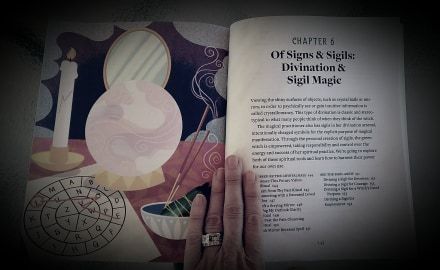
I love this quote from my new book Green Witchcraft Grimoire: "Crystal balls are a gateway to the Spirit world, which makes them the perfect divination tool for connecting with a loved one who has passed.“

It reminds me of the first time a deceased spirit came through a tarot reading:

I was reading for an elderly man, and the reading was going along normally, when I suddenly said to him, "Okay, there’s a red-headed woman who’s just jabbering away trying to get my attention. Does this mean anything to you?”

He went pale and told me that it sounded like his wife who passed away just a few months ago. 

I said, “She’s very animated and chatty, isn’t she?” 

He said, “Yes!” 

It was at this moment I realized that divination tools can be used successfully to communicate with deceased loved ones. 

Has anyone else experienced this?

You can find more here: https://amzn.to/2X7DGbk


Thursday, March 12, 2020

A Mediumship Reading ~ A Message From the Other Side


Deck: Sacred Circle Tarot


  • 1 ~ the person who has passed on


Abandonment/8 of cups

This is someone who left your life and inner circle before they passed, either a spouse or romantic partner, a child, or a parent. Their disassociation with you during life may not have felt to them that they were leaving anything behind, or abandoning anyone, but to family members around them, and particularly to you, this may have been exactly how you felt about their departure from your life

  • 2 ~ their life, looking back


The Green Man (coincides with The Fool in a standard deck)


Lots of foolishness, a gay naivete that accompanied youth or puberty, the teen years. It included poor choices, a long journey (figuratively), as in getting back to a point in the road or a juncture of life that was abandoned for a while. Spunk, bravado, pride, aloofness, sometimes condescension comes to mind. Also, “ulterior motives” may accompany their life experiences. I also feel that this may represent a young male, either indicating that this individual died young, or this is how they choose to represent themselves to me, as in wanting to appear as they were during a happy period in their life.

  • 3 ~ a lesson they’d like to share


Regret/5 of cups


This individual expresses a lot of regret from their vantage point on the other side. This includes relationships thrown away; opportunities tossed aside; many losses experienced on a variety of levels. I feel the biggest thing that this spirit wants to share with us is not to miss out on, or lose something, that is or could be precious in our lives. Don’t take anything for granted. Don’t treat important things in your life frivolously.

  • 4 ~ something they wish they’d paid more attention to


Success/6 of wands


This spirit wishes they’d paid more attention to meeting goals, that they would have worked harder to achieve more in their life. I believe this individual became so wrapped up in other activities or relationships that they were led off a chosen path, lured away from the direction their life was meant to go. There is also the idea of being bound against one’s will from actively making decisions and implementing action during their life that would have precipitated success. He’s telling us to be vigilant, don’t be easily swayed by convincing people and shiny promises that will prove destructive and hollow.

  • 5 ~ a message from this spirit to us


The Web/major arcana #11

Spirit is apologizing for getting himself caught up in unfavorable circumstances and decisions that affected your life. He’s incredibly regretful of any pain or trauma that he may have caused during his life time to loved ones and family. This spirit realizes that there is no way to take back the experiences of his previous life and make amends to the people he touched, but he wants you to know that he is well aware of the repercussions his life had on you, and he’s sorry, so very sorry. Also, he may choose to show his presence to you in the appearance of a white dog. When you see a white dog, a white dog that grabs your attention, know that this spirit is present and making a connection with you.


If you're intersted in a mediumship reading,
email me at witch_of_endore@yahoo.com

Type "Mediumship Reading"in the subject line.

Readings are $49.99


This post was originally published
at Magickal Connections May 2019.


Thursday, September 5, 2019

My Mother's Ghost


You'll find this post at my other blog,
Magickal Connections:


"She talked about how nothing can grow and thrive without trust, and that learning to trust someone is like a leap of faith, just like jumping off that cliff. You’ll just know in a weird unexplainable way that they will catch you and safeguard your heart and soul, because they are who they are."